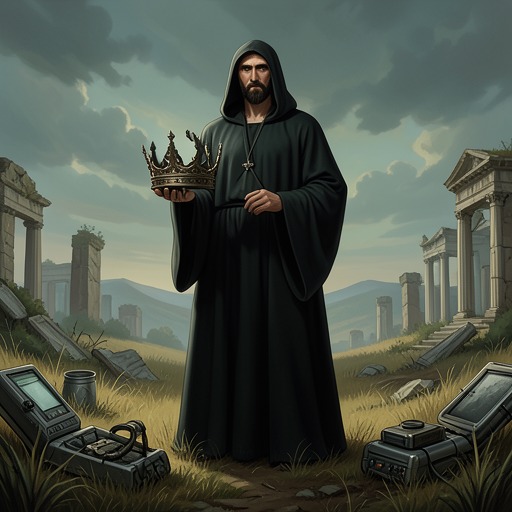
Alfonso manifested and declared Theodor as heir
The Castle of OtrantoAlfonso’s apparition and declaration that Theodore is his true heir bring the supernatural judgment of Otranto’s succession into public view. The revelation overturns Manfred’s claim, confirms Theodore’s standing, and precipitates Manfred’s confession and abdication.
Causes and Background
The apparition answers a dispute that has been argued through competing claims of blood, inheritance, and possession. Frederic’s herald had demanded that Manfred return Isabella to her father and surrender Otranto, asserting that Frederic was nearest in blood to Alfonso the Good. Manfred, in turn, defended his title through his grandfather Ricardo’s alleged inheritance from Alfonso, while acknowledging that Frederic’s claim was strong.
The competing accounts are tested against a history of concealed wrongdoing. Manfred eventually admits that Alfonso died by poison and that a fictitious will made Ricardo his heir. He also recounts Ricardo’s vow to Saint Nicholas, who appeared in a dream and promised that Ricardo’s descendants would rule until the rightful owner grew too large to inhabit the castle, provided Ricardo’s male line endured. Manfred’s confession that no other member of that line remains prepares the way for the apparition’s judgment.
The Apparition and Declaration
The revelation occurs after Matilda’s death. As Manfred approaches, the company’s distress tells him what has happened; at that moment thunder shakes the castle, the earth rocks, and the sound of supernatural armour is heard. The party enters the court, where the castle wall behind Manfred is cast down and Alfonso’s immense form appears amid the ruins.
The vision declares Theodore the true heir of Alfonso. It then ascends toward heaven; the clouds part to reveal Saint Nicholas, who receives Alfonso’s shade, and both disappear from mortal sight in a blaze of glory. The witnesses fall prostrate, acknowledging the divine will. The scene turns an unresolved political claim into an authoritative supernatural verdict: the same saint associated with Ricardo’s promise now appears as part of the revelation that displaces Manfred’s line.
Evidence and Recognition
The vision is followed by an explanation of Theodore’s descent. Jerome recounts that Alfonso, driven by a storm to Sicily while traveling to the Holy Land, married Victoria in secret before continuing on the Crusade. Alfonso left her pregnant; after a daughter was born, news of his supposed death and Ricardo’s succession left Victoria without a secure public means of establishing her marriage. The daughter later married Jerome, making Theodore Alfonso’s grandson and rightful heir.
Manfred accepts Jerome’s account without requiring the authentic writing Jerome offers. He says that the events of the preceding days and the vision corroborate it beyond documents. That response marks a shift in the basis of judgment: the contested title had been defended through a claimed bequest, inherited possession, and the strength of Manfred’s family, but the apparition and the disclosed marriage settle the matter in favor of descent from Alfonso.
Consequences and Significance
Hippolita interprets the declaration as the end of Manfred’s household’s rule: Conrad and Matilda are dead, and Theodore is the true Prince of Otranto. Manfred, acknowledging his crimes and the vision, resigns the dominions. The following morning he signs his abdication with Hippolita’s approval, and both enter religious life in neighboring convents.
The apparition therefore does more than identify an heir. It joins the prophecy, the hidden marriage, Jerome’s testimony, and the family’s downfall into a single judgment on political legitimacy. The resolution is not achieved by the proposed combat or by Manfred’s argument over Ricardo’s title; it arrives through a supernatural disclosure that makes the buried history public and compels the usurper to surrender power.